
Out-of-school STEM learning is linked to higher confidence, better math performance, and stronger career awareness, with studies noting measurable gains in STEM identity for participants. Middle School STEM Programs focus on hands-on, experiential learning that builds critical thinking and problem-solving.
This practical guide covers the growing importance of after school programs for middle schoolers, their various formats, expected curricula and sample schedules, and how enrolling in one can propel prospective students to secure lasting careers in the STEM field.
Understanding After School Programs for Middle Schoolers
The most effective after school programs for middle schoolers center on doing, not just listening: labs, builds, and real experiments where kids hypothesize, test, and iterate. When students assemble a simple circuit, 3D print a bracket, or debug a robot, they practice the scientific method and computational thinking in authentic contexts.
Integrating hands-on STEM activities for kids with reflection time builds resilience, creativity, and clear problem-solving habits.
Clear Skill Progression Aligned to Honors/AP Readiness
Seek a Middle School STEM Program that sequences knowledge from fundamentals to application. A strong pathway might move from cells to systems in life science, or from block coding to microcontrollers in engineering. Rubrics and unit maps aligned with high school Honors/AP expectations ensure students develop math fluency, lab technique, and scientific writing.
Include project-based learning for middle school so skills build logically toward more advanced coursework.
Hybrid Flexibility: Weekday Virtual Sessions Plus Weekend Labs or Projects
Hybrid design supports busy schedules while preserving depth. Short weekday sessions introduce ideas, assign prep, and guide reflection. Weekend labs then deliver the tactile work: anatomy with human models, wet lab experiments, or robotics challenges.
Middle School STEM Programs: Year-Round Structure and Sample Tracks
Consistency sustains momentum. Many programs run two semesters with weekly after school sessions for instruction and mentoring. Every three or four weeks, project sprints culminate in share-outs that build presentation and iteration skills. This structure helps learners internalize planning, version control, and peer feedback while steadily growing competency.
Two-track model examples:
- Bio track: Human biology, molecular biology, health sciences, bioengineering
- Tech track: Coding and programming, robotics, 3D design/printing, engineering
Tracks let students explore breadth while building depth. In the bio track, students might simulate physiology with VR, pipette in a wet lab, and propose assistive bioengineering designs. In the tech track, learners pair coding with robotics, then shift to CAD and 3D printing to prototype functional mechanisms.
This dual approach creates a balanced portfolio that colleges and future mentors value.
Tools and Modalities: VR/AR Simulations, Human Models, Wet Labs, Design-To-Prototype Workflows
VR or AR simulations accelerate conceptual insight, human models anchor anatomy, wet labs teach measurement and sterile technique, and design-to-prototype workflows make engineering tangible.
Combining these modalities increases transfer, so concepts learned online become skills practiced in person and documented as STEM portfolio ideas for future applications.
AI Classes for Middle School: Foundations and Project Ideas
Age-Appropriate AI Literacy
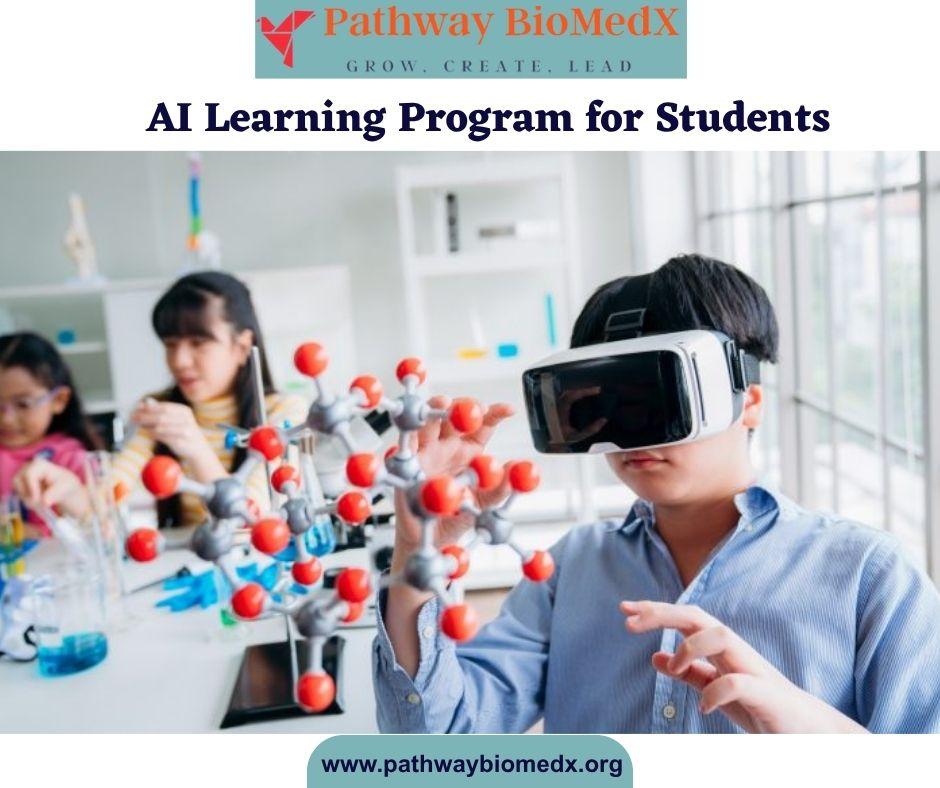
AI classes for middle school should start with data as evidence, how models learn patterns, and why fairness, privacy, and transparency matter. Students can evaluate labeled datasets, debate bias, and examine everyday AI, from image filters to content recommendations. This foundation prepares learners for responsible creation in any AI learning program.
Coding On-Ramps
Effective AI courses respect the ramp. Begin with visual, block-based tools to illustrate decision trees and classifiers, then graduate to Python-lite notebooks as confidence grows. Robotics demos that use cameras and color detection make perception concrete, while simple feature extraction shows how computers “see” the world.
Project Ideas
High-engagement projects include:
- Classification games that sort images or sounds and visualize confusion matrices
- Chatbot prototypes that practice intents, entities, and polite fallback flows
- Sensor-based smart devices that blend rules with basic ML to react to light or motion
Measuring Impact Beyond Grades
STEM Identity, Collaboration, Iteration, and Presentation Skills
Track whether students begin saying “I am a science person,” how they contribute to teams, and how they handle setbacks. Regular demos build storytelling with evidence, and iteration cycles cultivate grit. These signals often predict persistence in advanced courses as reliably as test scores.
Academic Alignment: Honors/AP Science and Competitive Admission Readiness
Programs should map to standards and emphasize data analysis, graphing, lab safety, and technical writing. This scaffolding supports Honors/AP expectations and helps students build an authentic trajectory that informs high school course selections and future applications.
Building a STEM Portfolio
A living portfolio showcases growth:
- Scanned lab notebooks with tables, sketches, and error analysis
- Code repositories with clear README files and meaningful commit messages
- CAD screenshots and 3D-printed parts photographed with captions
Conclusion: Building Future Innovators with Hands-On STEM Learning
Choose after school programs for middle schoolers that blend hands-on STEM, structured progression, and accessible AI literacy in a supportive hybrid format. Prioritize options that publish clear learning outcomes, showcase real student portfolios, and use age‑appropriate tools that scale from block coding to Python‑lite.
If you’re exploring year‑round options, consider Pathway BioMedX for a structured and result-oriented Middle School STEM Program in Boston. Give your learner the runway to grow skills and identity in STEM.
Ready to take the next step? Register with Pathway BioMedX to secure your spot today!
FAQs
1. What should after school programs for middle schoolers include?
They should blend hands-on STEM activities for kids, project-based learning for middle school, and a coding and robotics curriculum, plus a pathway to build a strong STEM portfolio.
2. How do AI classes for middle school stay age-appropriate?
Start with data basics and ethics, then move from block coding to Python-lite. Pair concepts with robotics demos, computer vision mini-labs, and small projects like chatbots.
3. How is a quality Middle School STEM Program structured?
Common models use two semesters, weekly after school sessions, and project sprints with bio and tech tracks. Tools include VR simulations, human models, wet labs, and design-to-prototype workflows.