
Multiple studies report something interesting: students who spend consistent time in STEM programs often outperform many classmates in math and science. They also feel more confident using technology tools. A carefully designed Afterschool STEM Academy program can offer that same momentum, right when curiosity runs high and long-term interests begin to solidify.
STEM programsgive inquisitive middle schoolers somewhere to move beyond worksheets. In that setting, they wrestle with real problems, test ideas, and begin to experience what it feels like to think the way scientists and engineers approach challenges. Through hands-on STEM activities for middle school students, they ask sharper questions and see how creativity connects to future opportunities.
Why Choose Afterschool STEM AcademyProgram for Middle Schoolers?
An Afterschool STEM Academy that takes learning seriously does far more than supervise homework and clear doubts. The program cultivates ways of thinking and practical skills that support advanced science courses, future college options, and meaningful STEM careers.
Parents usually notice several clear advantages:
- Strong problem-solving habits develop because students work through open-ended challenges instead of only repeating formulas.
- Early exposure happens with biotechnology, robotics, and engineering.
- Growing ease emerges around digital tools, simulations, and coding platforms that sit at the center of many modern professions.
- Better collaboration and communication skills emerge naturally as learners plan, build, test, and present projects in small teams.
- A resilient attitude takes root. Setbacks in a project get treated as information and practice.
Many parents investigate after-school STEM programs for 6th to 8th graders because they see a learning opportunity. A focused program can fill that gap in a structured, inspiring way.
Middle School STEM AcademyCurriculum
At the center of a strong Middle School STEM Academyprogram sits a curriculum that unfolds in a clear sequence. Interactive lessons, guided projects, and regular time for open exploration work together. Students gradually shift from receiving information to building and testing their own ideas.
Educators often weave in elements such as:
- Virtual and augmented simulations: Zspace VA or VR environments let students explore biology, physics, and human anatomy in interactive 3D scenes.
- 3D printing and design: Design tasks where learners sketch simple devices, create digital models, and then print prototypes.
- Programmable robotics: Units ask students to program robots to navigate mazes or imitate basic medical tools. Logic, creativity, and teamwork merge into the same activity.
- Health and medicine modules: Lessons on human body systems, medical technology, and public health questions connect classroom science to visible roles in hospitals and research labs.
- Engineering and coding pathways: Longer projects build skills in defining problems, using design thinking, writing algorithms, and debugging code within project-based STEM learning for kids.
Through this mix, an afterschool program covers a wide stretch of STEM topics. Core ideas circle back each time in a fresh, hands-on context that feels different from a typical class period.
Hands-On Learning with Lab Experiments for Young Learners
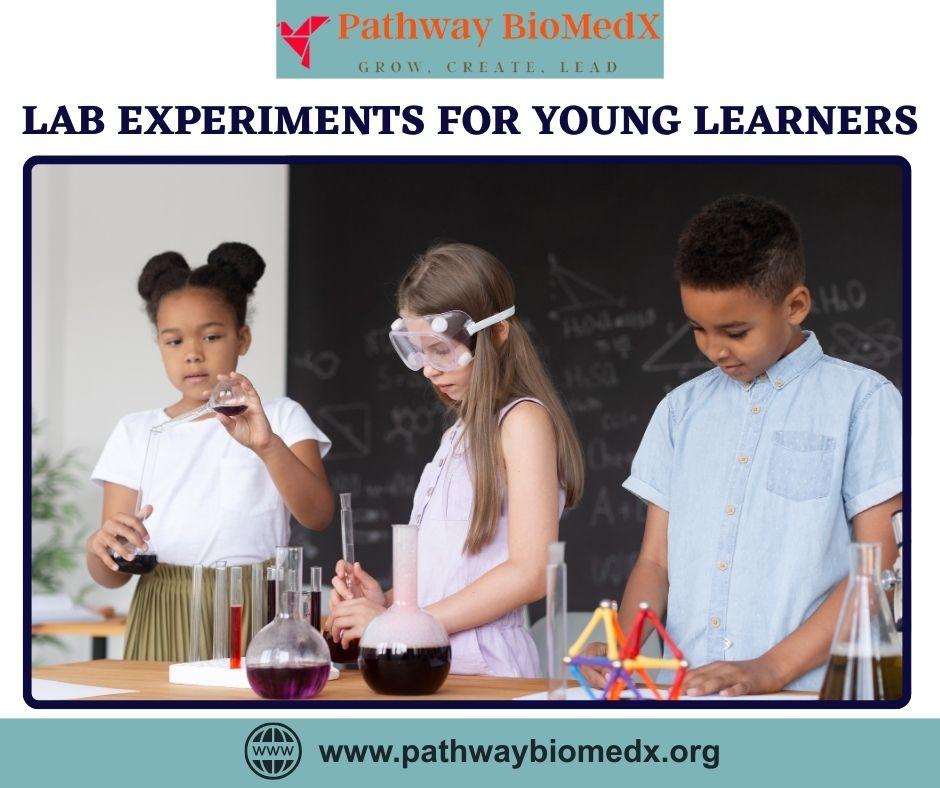
In many programs, the most exciting moments arrive during lab experiments for young learners. Concepts that felt distant on a slide suddenly sit in front of students.
Common examples include:
- Testing how different materials change readings on heart-rate sensors or simple biomedical prototypes.
- Exploring microbiology by safely culturing and observing microorganisms, then connecting what they see to health and hygiene.
- Building models of the human respiratory or circulatory system using everyday materials. Complex body processes become visible.
- Using sensors and data loggers to collect environmental data. Biology lessons tie to local air, water, or temperature conditions.
Hands-on lab experimentsinvite students to think and build at the same time.
Hybrid Learning & Next Steps
A growing number of families find that a hybrid afterschool STEM program suits both academic needs and busy calendars. Concepts begin in online sessions. Then reappear in richer form during hands-on time in a dedicated STEM lab.
A typical hybrid Afterschool STEM Academy might feature:
- Weekly online sessions: Afterschool Zoom classes where instructors introduce central ideas, run live simulations, respond to questions, and preview what will happen in the next lab visit.
- Weekend Innovation Lab time: On-site sessions at a STEM Innovation Lab where learners handle real tools. Students carry out lab experiments on specialized equipment.
- Linked learning pathways: Carefully planned sequences keep virtual lessons and in-person labs connected. Each week feels like a new chapter in one ongoing project rather than unrelated activities.
- Family-aware scheduling: Predictable and consistent schedules allow parents to fit STEM learning into a week that already includes sports, arts, and family responsibilities.
Conclusion: Join the Pathway BioMedX Afterschool STEM Journey
Families who want their child to grow their knowledge and skills in a Middle School STEM Academy program that values curiosity, clear thinking, and steady support will find a natural next step at Pathway BioMedX. Pathway BioMedXintroduces students to real applications in medicine, life sciences, engineering, and technology. We also offer bioengineering summer camps and focused coding summer programs.
Visit Pathway BioMedX to explore upcoming sessions and see how your child can thrive in an Afterschool STEM Academy that invests in middle school potential. Take a confident first step into a future-ready STEM journey today!
FAQs
1. What grades can enroll in a Middle School STEM Academy?
Most Middle School STEM Academy programs welcome students in grades 6 to 8 – a period when interests sharpen and long-term academic direction often begins to form.
2. What types of lab experiments are conducted?
Students typically explore biology, engineering, and technology through safe, age-appropriate work. These include sensor-based projects, basic microbiology investigations and model-building.
3. How does the Academy prepare my child for future STEM success?
The Academy blends rigorous coursework, lab experiments for young learners, and exposure to real-world tools and careers. Students develop the problem-solving, collaboration, and technical skills needed for advanced courses, college pathways, and future STEM roles.