
To maximize success on the path to Ivy League Admissions, high-schoolers need to build a strong college profile that allows them to differentiate themselves from other students. Enrolling in the right afterschool tech program Boston allows students to move quickly from learning concepts to building tangible projects that showcase “Ivy League readiness”. Rigor, a clear initiative and the right mentorship are essential elements that deliver clear advantages for prospective students.
“Ivy League Readiness” – How an Afterschool Tech Program Boston Supports It
Ivy League caliber applications typically show a clear pattern – a student commits to a theme, builds in-depth knowledge over time, and produces outcomes that feel earned. An afterschool tech program helps translate STEM education Boston into visible growth from fundamentals to advanced problem-solving.
A strong tech program supports evidence through:
- Academic Rigor: Challenging concepts, increasing complexity and measurable skill progression
- Ownership: Student-led decisions, iterations, and authentic problem framing, so the work does not look like a template.
- Impact: Projects with real use cases and clear results.
- Mentorship: Consistent feedback that improves how students think, communicate, and solve problems.
Standout Proof Points Students Can Build
Look for programs that help students display:
- Impactful projects with real practical applications
- Work that uses real data, then explains results clearly, exhibiting a research mindset.
- Leadership roles like mentoring peers or organizing a small community tech initiative.
The Academic Fit Factor
An afterschool tech program should complement AP Computer Science or advanced STEM education Boston. It helps a student craft a clear narrative and promotes interest in future career options in the fields of engineering or biotech.
Common Criteria to Evaluate an Afterschool Tech Program
1. Curriculum and Progression
A results-driven tech program is designed around a proper academic structure. Analyze the learning pathways and whether they follow a structured progression from fundamentals to application.
2. Project Portfolio Quality
A strong portfolio should convey the following:
- The problem statement and why it matters.
- Iterations, including what failed and what changed.
- Code/design artifacts and a final demo or deliverable.
- Results and reflection, written in the student’s voice.
3. Research Exposure
When it comes to STEM education, research exposure can mean forming a hypothesis, testing assumptions, collecting data, analyzing outcomes and presenting conclusions.
Even better is if the program supports cross-disciplinary work, such as projects that intersect medicine, health, and bioengineering. That mix can be a powerful differentiator for students interested in biotech fields.
4. Mentorship and Instruction Quality
Mentorship is where students level up fastest. Look for instructors who can teach clearly, give specific feedback and model professional habits like documentation and code review.
5. College-Readiness
A high-quality program builds application readiness as a byproduct of good teaching. It should help students leave with evidence they can use anywhere. For families evaluating programs, the safest signal is transparency – concrete student work, consistent feedback, and realistic expectations.
Learning Pathways that Produce Tangible Results
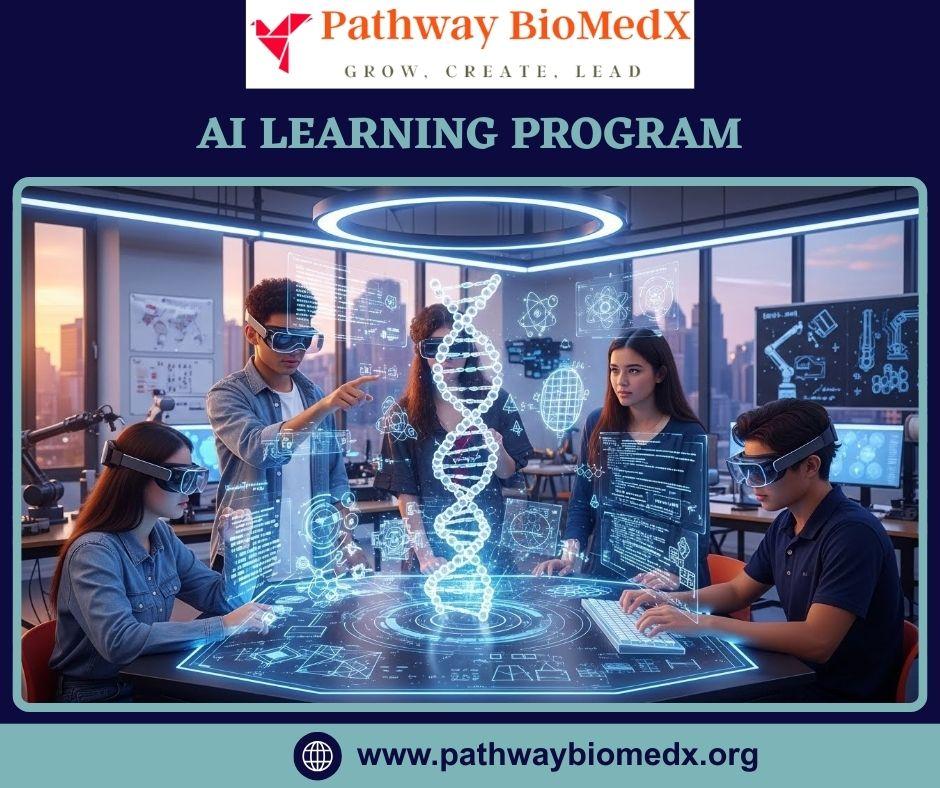
AI & Robotics Pathway for Future Engineers
This path fits curious builders, math-leaning students, and future CS or engineering majors. A solid AI learning program should start with the foundations (programming, data, algorithms) then move into applied machine learning.
Prioritize:
- Robotics plus coding fundamentals.
- 3D design and prototyping.
- Iterative engineering challenges with testing and refinement.
Biotech Pathway for Pre-Med, Bioengineering and Health-Tech
This path is great for students who love biology or medicine but want a technical edge. It helps connect molecular biology context to computational thinking, data literacy, and ethical health-tech applications.
A student can stand out by building projects like a health data dashboard, a bioinformatics inspired analysis or a tech project that supports community health education.
Conclusion
When deciding on an afterschool tech program, use a simple decision framework – academic rigor, portfolio quality, mentorship, research exposure and college-readiness. Look for a program that delivers structured coursework and offers tailored feedback to students that enhances their college profile and success in Ivy League admissions.
For parents looking for a structured afterschool tech program Boston that blends STEM skill-building with research-minded learning, Pathway BioMedX offers afterschool Biology Fundamentals and afterschool AI & Technology Fundamentals for grades 9–12, covering subjects like molecular biology, bioengineering, robotics, coding, and 3D design.
Explore Pathway BioMedX today and enroll in a learning track that fits your goals!
FAQs
1. What makes an afterschool tech program in Boston Ivy League admission focused?
It emphasizes depth, real projects, mentorship, and leadership opportunities that produce authentic evidence of real growth.
2. What grade should students start an afterschool tech program in Boston to be competitive for Ivy League admissions?
Middle school (Grades 6–8) and high school (Grades 9–10) are ideal for building foundations early while allowing students to develop a strong portfolio and college profile.
3. What are the best portfolio projects for students applying to Ivy League schools?
Projects with real-world relevance such as a community-facing app, a data analysis project with clear findings or a robotics build that documents iterations and testing.
4. Can an afterschool tech program help students get research experience or a lab-style project?
Yes, if it teaches students to form hypotheses, work with data, test assumptions and present results like a mini research paper.
5. Should students choose coding or biotech tracks for an afterschool tech?
Choose based on academic interests: coding/AI suits future CS or engineering majors while biotech fits pre-med or bioengineering students.